
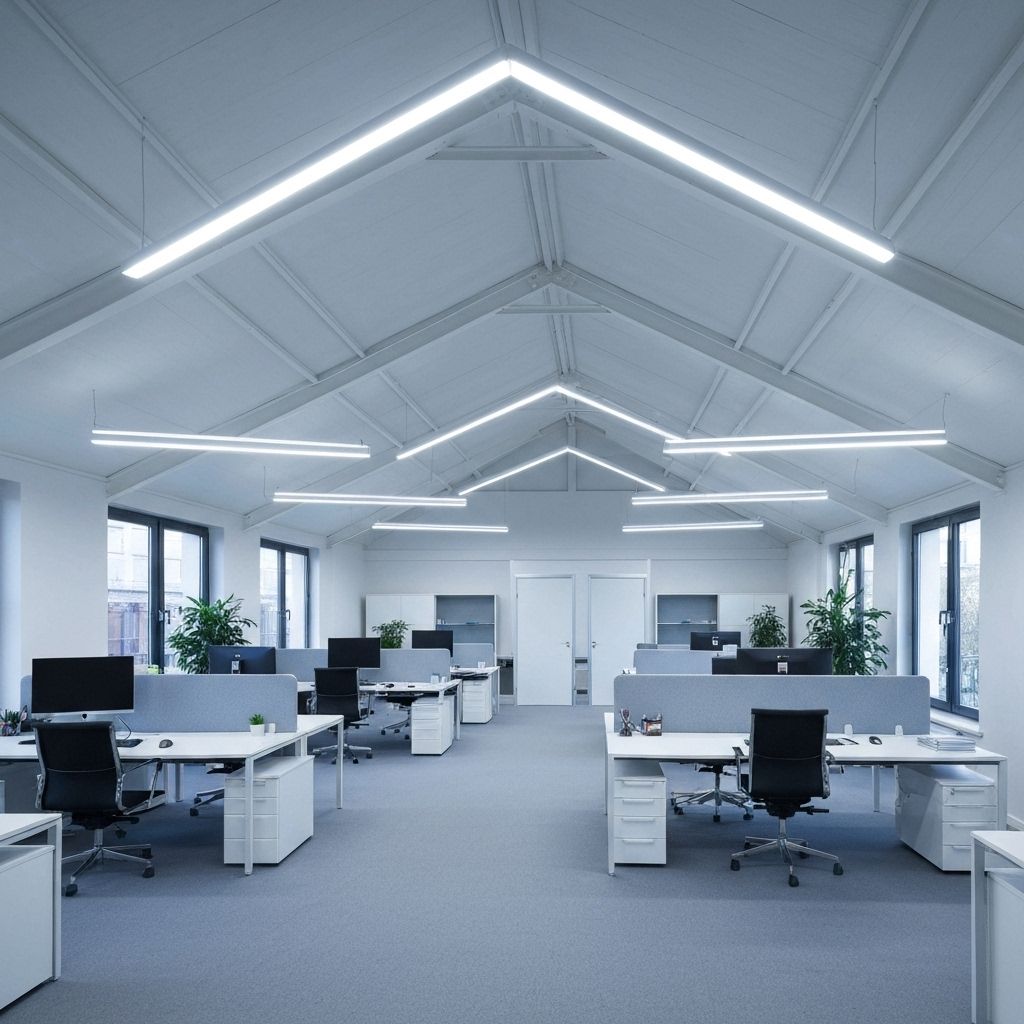
Switching to LED lighting is one of the smartest investments a business can make. The benefits extend far beyond simple energy savings, impacting your bottom line, employee productivity, and environmental footprint.
Dramatic Energy Savings
LED lights use 75% less energy than traditional incandescent bulbs and 50% less than fluorescent lighting. For a typical commercial space, this translates to thousands of pounds in annual savings. The average business can reduce lighting costs by 60-70% after switching to LED.
Extended Lifespan
Commercial LED lights last 50,000-100,000 hours compared to 1,000 hours for incandescent and 10,000 hours for fluorescent bulbs. This means:
- Fewer replacements and less maintenance
- Reduced labor costs for changing bulbs
- Less disruption to business operations
- Lower disposal and waste management costs
Improved Workplace Productivity
LED lighting quality significantly impacts employee performance:
- Better Color Rendering: LEDs provide superior color accuracy, reducing eye strain and improving focus
- Reduced Flicker: Unlike fluorescent lights, LEDs don't flicker, preventing headaches and fatigue
- Customizable Color Temperature: Adjust lighting to match tasks and time of day
- Instant Brightness: No warm-up time means immediate full illumination
Enhanced Safety and Security
LED lighting improves workplace safety through:
- Brighter, more uniform illumination
- Better visibility in parking areas and walkways
- Compatibility with motion sensors and security systems
- Reliable performance in cold temperatures
Environmental Benefits
Businesses increasingly prioritize sustainability. LED lighting helps by:
- Reducing carbon footprint by up to 70%
- Containing no toxic mercury (unlike fluorescent bulbs)
- Producing less heat, reducing cooling costs
- Being fully recyclable
Smart Lighting Integration
Modern LED systems integrate with smart building technology:
- Automated scheduling and dimming
- Occupancy sensors for unused spaces
- Daylight harvesting to maximize natural light
- Remote monitoring and control
- Data collection for energy management
Return on Investment
While LED fixtures cost more upfront, the ROI is compelling:
- Typical payback period: 2-3 years
- Energy savings: 50-70% reduction in lighting costs
- Maintenance savings: 80% reduction in replacement costs
- Potential utility rebates and tax incentives
Making the Switch
Transitioning to LED lighting requires professional planning:
- Energy Audit: Assess current lighting and energy usage
- Custom Design: Plan optimal LED placement and specifications
- Rebate Research: Identify available incentives
- Professional Installation: Ensure proper setup and integration
- Verification: Confirm energy savings and performance
Conclusion
Commercial LED lighting is no longer optional—it's essential for competitive businesses. The combination of energy savings, improved productivity, and environmental benefits makes LED conversion one of the highest-ROI improvements you can make.
WikiVolt specializes in commercial LED retrofits. Contact us for a free lighting audit and discover how much your business can save.