
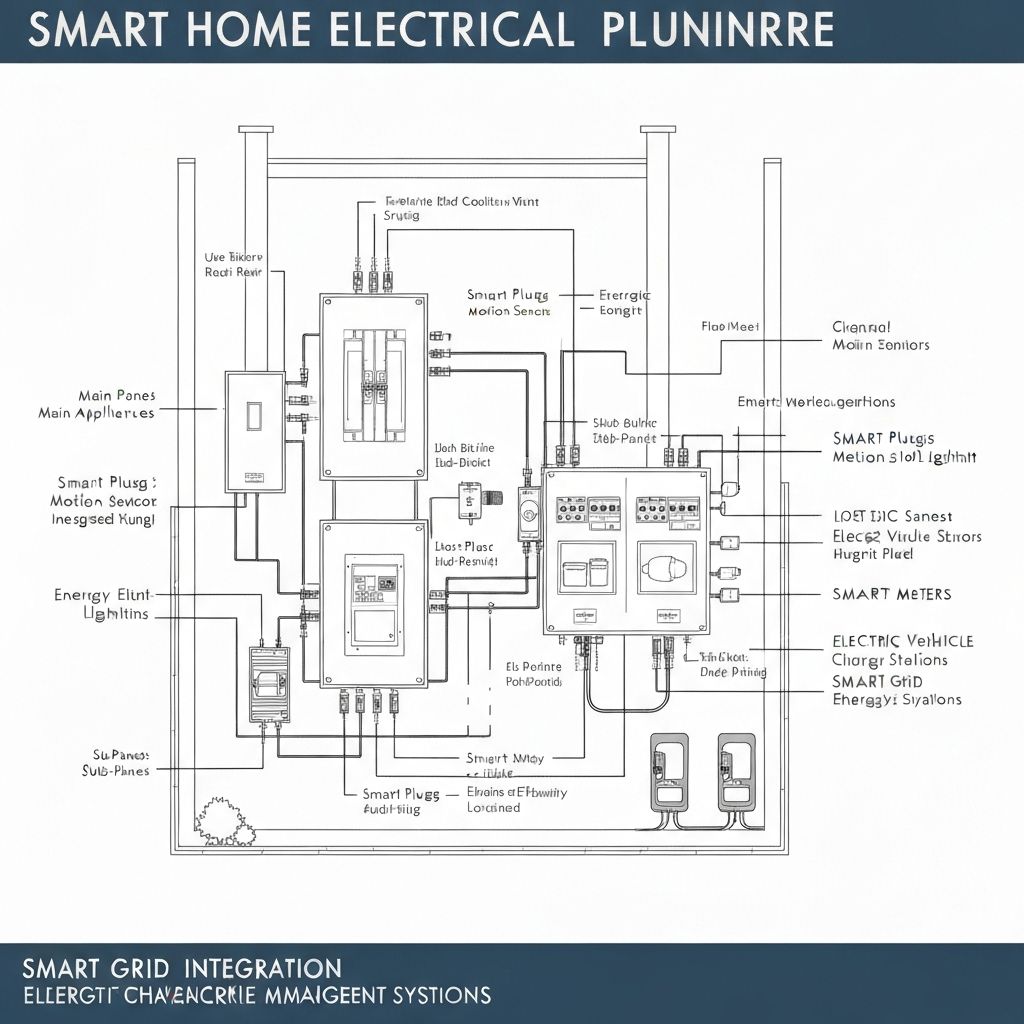
Transforming your house into a smart home requires careful electrical planning. This guide will help you prepare your home's electrical system for the connected future.
Understanding Smart Home Power Requirements
Smart devices may seem small, but collectively they can significantly impact your electrical system. Most smart home devices require constant power, even in standby mode, to maintain connectivity.
Essential Electrical Upgrades
1. Adequate Outlets
Smart homes need more outlets than traditional homes. Consider installing:
- USB outlets for charging devices
- Additional outlets near entertainment centers
- Outlets in strategic locations for smart speakers and hubs
- Weatherproof outlets for outdoor smart devices
2. Neutral Wires for Smart Switches
Most smart switches and dimmers require a neutral wire to function. Older homes often lack neutral wires in switch boxes. This is one of the most common obstacles in smart home installations.
3. Strong Wi-Fi Coverage
While not strictly electrical, ensuring your home has adequate electrical outlets for Wi-Fi mesh systems or range extenders is crucial for smart home reliability.
Planning by Room
Living Room
- Smart lighting with dimmer switches
- Smart TV and entertainment system outlets
- Smart speaker placement
- Motorized blinds power supply
Kitchen
- Smart appliance outlets (refrigerator, oven)
- Under-cabinet lighting circuits
- Smart faucet power supply
- Voice assistant placement
Bedroom
- Bedside USB charging outlets
- Smart lighting controls
- Smart thermostat wiring
- Motorized curtain power
Bathroom
- GFCI-protected smart mirror outlets
- Smart exhaust fan wiring
- Heated floor controls
- Smart shower system power
Smart Home Hub Placement
Your smart home hub needs reliable power and central location for optimal device communication. Consider installing a dedicated outlet in a central location, preferably in a closet or utility area where the hub won't be accidentally unplugged.
Backup Power Solutions
Smart homes are vulnerable to power outages. Consider:
- UPS (Uninterruptible Power Supply) for critical devices
- Whole-home backup generator with automatic transfer switch
- Battery backup for security systems
Future-Proofing Your Installation
Technology evolves rapidly. When planning your smart home electrical system:
- Install more outlets than you currently need
- Use larger conduit for easier wire additions
- Consider a larger electrical panel for future expansion
- Document all smart device locations and circuits
Professional Installation Benefits
While some smart devices are DIY-friendly, professional electrical work ensures:
- Code compliance and safety
- Proper load calculations
- Warranty protection
- Optimal device placement
- Integration with existing systems
Conclusion
A well-planned electrical system is the foundation of a reliable smart home. WikiVolt's certified electricians specialize in smart home installations and can help you create a comprehensive plan that meets your needs today and adapts to tomorrow's technology.
Contact us today to schedule a smart home electrical consultation.